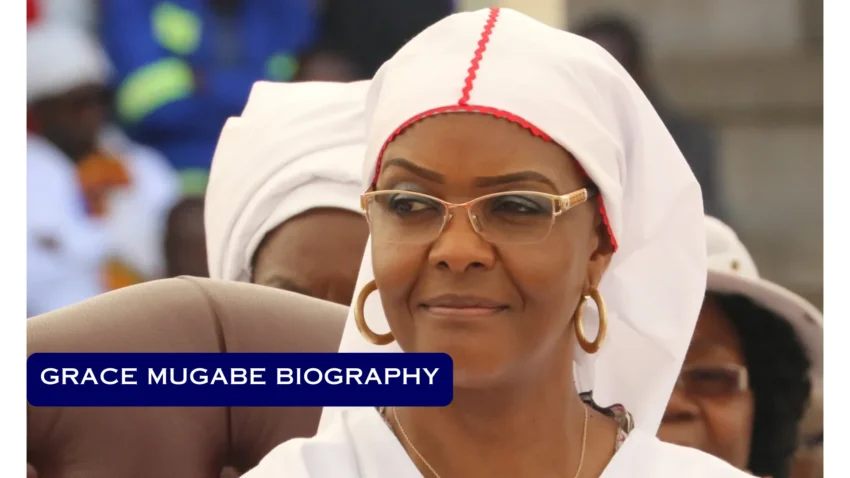
Grace Mugabe is one of the most controversial and influential political figures in modern African history. As the former First Lady of Zimbabwe and wife of longtime president Robert Mugabe, she played a significant role in shaping Zimbabwe’s political landscape during the later years of her husband’s rule.
Known for her strong personality, political ambitions, and high-profile lifestyle, Grace Mugabe became both admired and criticized across Zimbabwe and internationally.
Profile Data
| Field | Details |
|---|---|
| Full Name | Grace Ntombizodwa Mugabe (née Marufu) |
| Born | 23 July 1965 |
| Age | 60 years (as of 2025) |
| Birthplace | Benoni, South Africa |
| Nationality | Zimbabwean |
| Occupation | Politician, Businesswoman |
| Spouse | Robert Mugabe (m. 1996–2019) |
| Children | Bona Mugabe, Robert Mugabe Jr., Bellarmine Chatunga Mugabe |
| Political Party | ZANU-PF |
| Net Worth | Estimated in the millions (exact figure not publicly confirmed) |
Early Life
Grace Mugabe was born Grace Ntombizodwa Marufu on July 23, 1965, in Benoni, South Africa. Though born in South Africa, she was raised in Zimbabwe (then Rhodesia) where she spent most of her formative years.
She grew up in a relatively modest family and attended local schools in Zimbabwe. Later, she pursued secretarial training, which would eventually shape her entry into politics and public life.
Education
Grace Mugabe attended school in Zimbabwe and later earned a degree in Chinese language from the University of Zimbabwe. Her academic journey became controversial later in life when she reportedly earned a PhD from the University of Zimbabwe in a short period, raising questions and public debate.
Despite criticism, she maintained that she had completed her academic qualifications legitimately.
Marriage to Robert Mugabe
Grace Mugabe began working as a secretary in the President’s Office during the 1980s. At the time, Robert Mugabe was married to his first wife, Sally Mugabe. During this period, Grace reportedly began a relationship with Robert Mugabe.
After Sally Mugabe passed away in 1992, Robert Mugabe married Grace in 1996 in a lavish ceremony that attracted both local and international attention.
The couple had three children together: Bona, Robert Jr., and Bellarmine Chatunga.
Rise to Political Influence
Grace Mugabe initially maintained a low political profile after her marriage. However, over time, she became increasingly active in Zimbabwean politics.
In 2014, she was appointed head of the Women’s League of the ruling party, ZANU-PF (Zimbabwe African National Union – Patriotic Front). Her appointment marked the beginning of her direct involvement in party politics.
She quickly became a powerful voice within the party and was seen as a leading figure in internal political struggles, particularly regarding succession debates surrounding President Robert Mugabe.
Political Ambitions and Succession Battle
As Robert Mugabe aged, discussions intensified about who would succeed him as president. Grace Mugabe was widely believed to harbor presidential ambitions. She emerged as a key figure in a faction within ZANU-PF known as the “G40” faction.
Her political rivalry with then Vice President Emmerson Mnangagwa escalated dramatically. Grace publicly criticized Mnangagwa and other party members, accusing them of plotting against her husband.
In November 2017, the Zimbabwean military intervened in what became known as a political transition. Robert Mugabe resigned shortly afterward, ending his 37-year rule. Mnangagwa became the new president of Zimbabwe.
Life After the 2017 Political Transition
Following Robert Mugabe’s resignation and later death in 2019, Grace Mugabe largely withdrew from public political life. However, she remains a significant public figure in Zimbabwe.
Her family has reportedly faced legal scrutiny and investigations concerning property ownership and alleged corruption. Nonetheless, she continues to maintain influence within certain political circles.
Controversies
Grace Mugabe’s public life has been marked by numerous controversies.
1. Extravagant Lifestyle
She was often criticized for her lavish spending during a time when Zimbabwe faced severe economic crises. Reports of expensive shopping trips abroad earned her the nickname “Gucci Grace.”
2. Assault Allegations
In 2017, Grace Mugabe was accused of assaulting a model in South Africa. The incident sparked international headlines and diplomatic discussions. She was granted diplomatic immunity, which further fueled public debate.
3. Academic Controversy
Her PhD degree from the University of Zimbabwe was also questioned by critics who claimed the process was unusually fast.
Net Worth
Grace Mugabe’s net worth has been widely speculated. While exact figures remain unclear, the Mugabe family was believed to own extensive properties, farms, and businesses in Zimbabwe and abroad.
Their wealth became a focal point of criticism, especially during Zimbabwe’s economic challenges, including hyperinflation and unemployment crises.
Relationship with the Media
Grace Mugabe’s relationship with both local and international media has been complex. Supporters portray her as a strong and assertive woman in African politics. Critics argue she contributed to political instability and economic decline during the final years of Robert Mugabe’s presidency.
Legacy
Grace Mugabe’s legacy is deeply intertwined with that of Robert Mugabe. To supporters of the former regime, she is seen as a loyal wife and influential political figure. To critics, she represents excess, controversy, and political manipulation.
Regardless of perspective, her role in Zimbabwe’s political transition of 2017 ensures her place in African political history.
Frequently Asked Questions (FAQs)
1. Who is Grace Mugabe?
Grace Mugabe is the former First Lady of Zimbabwe and the wife of former president Robert Mugabe.
2. When was Grace Mugabe born?
She was born on July 23, 1965.
3. How many children does Grace Mugabe have?
She has three children with Robert Mugabe.
4. What political party was she associated with?
She was a senior member of ZANU-PF.
5. What happened in 2017 in Zimbabwe?
In 2017, the military intervened, leading to Robert Mugabe’s resignation and the rise of Emmerson Mnangagwa as president.
Conclusion
Grace Mugabe remains one of the most controversial figures in Zimbabwean political history. From her early life as a secretary to becoming one of the most powerful women in Zimbabwe, her journey reflects ambition, influence, controversy, and political drama.
Her biography offers insight into Zimbabwe’s political evolution and the dynamics of power within long-standing leadership structures. Whether viewed as a political strategist or a controversial public figure, Grace Mugabe’s impact on Zimbabwe’s history cannot be ignored