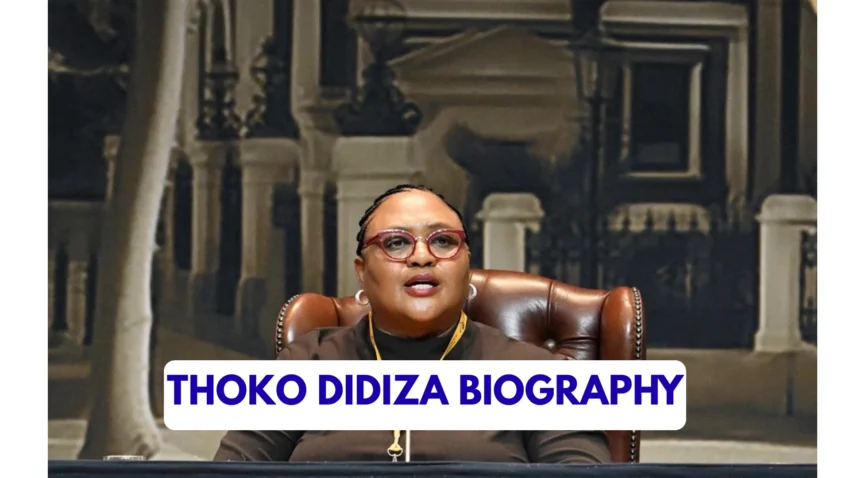
Angela Thokozile (Thoko) Didiza is one of South Africa’s most experienced public servants. Over three decades she moved from grassroots activism into senior cabinet roles, including agriculture and public works, and more recently into parliamentary leadership.
Her career maps South Africa’s democratic transition, rural development debates, and the modern challenges of land reform and food security.
Profile
- Full Name: Angela Thokozile Didiza
- Stage Name: Thoko Didiza
- Born: 2 June 1965
- Age: 60 (as of 2025)
- Birthplace: Durban, Natal Province (KwaZulu-Natal), South Africa
- Nationality: South African
- Occupation: Politician
- Spouse: Tami (Thami) Didiza
- Children: Five children
Early life and education
Thoko Didiza was born on 2 June 1965 in Durban, KwaZulu-Natal. She was raised in a family with rural farming roots — an influence she later referenced when speaking about agriculture and land. During the 1980s she became active in church-based and women’s organisations that opposed apartheid, which set the stage for her political career.
Although active in politics from a young age, Didiza completed formal tertiary qualifications later in life. She holds a BA (Honours) in Politics from the University of South Africa (UNISA) and a Master’s degree in Tertiary Education Management from the University of Melbourne. Her academic path underscores a commitment to continuous learning while serving in public office.
Entry into politics and early activism
Didiza’s political activism began in church and civil society. She worked with the South African Council of Churches (SACC) and the YWCA, and played leadership roles in women’s movements before South Africa’s democratic transition. In 1992 she became inaugural secretary-general of the Women’s National Coalition, which raised women’s voices in the negotiations to end apartheid. These formative roles grounded her in social justice and community organising.
Parliamentary career: deputy minister to senior cabinet posts
Elected to the National Assembly in 1994, Thoko Didiza was appointed Deputy Minister of Agriculture in Nelson Mandela’s Government of National Unity. At the time she was among the youngest deputies in the new government and rapidly developed expertise in an area she later described as part of her family heritage.
In 1999 she was appointed Minister of Agriculture and Land Affairs under President Thabo Mbeki, a high-profile and politically sensitive portfolio. Didiza remained in that role until 2006, when she became Minister of Public Works. Her tenure in these ministries spanned major policy debates about land restitution, redistribution and agricultural transformation in post-apartheid South Africa.
Resignation, hiatus and return
Following the political changes in the ANC leadership in 2008 — notably President Thabo Mbeki’s recall — Didiza was among several ministers who resigned. She spent a period outside frontline cabinet work between 2008 and 2014, during which she remained active in research, public service, and community projects before returning to Parliament.
Minister of Agriculture, Land Reform & Rural Development (2019–2024)
After the 2019 election President Cyril Ramaphosa appointed Didiza as Minister of Agriculture, Land Reform and Rural Development. The appointment reunited significant responsibilities — agriculture, land reform and rural development — into a single portfolio and placed Didiza at the center of efforts to balance agricultural productivity, food security and equitable land access. Her period in office involved managing animal-health crises, stakeholder consultations, and work on policy frameworks for land reform. Her appointment was welcomed by many in the agri-sector and international organisations.
Speaker of the National Assembly (2024– )
In June 2024 Thoko Didiza was elected Speaker of South Africa’s National Assembly — a role that places her at the heart of parliamentary oversight and debate. As Speaker she chairs the Assembly’s proceedings and represents Parliament in constitutional and international forums. Her election to this post reflects long experience across executive and legislative branches.
Key achievements and leadership style
- Experienced policy administrator: Didiza has led large, complex departments and managed high-stakes portfolios such as land reform and public works.
- Bridging stakeholders: Known for a consultative approach, she has engaged farmers, unions, civil society and international bodies to navigate contentious reforms.
- Longstanding commitment to women’s leadership: From early leadership in women’s coalitions to chairing parliamentary women’s groups, Didiza’s career emphasizes gender inclusion.
Controversies and criticisms
Like many senior politicians, Didiza’s career has attracted controversy: policy responses (for example to animal disease outbreaks) and political decisions (such as nominations for municipal positions) have sometimes provoked public debate. Her nomination as the ANC’s candidate for mayor of Tshwane in 2016 sparked significant protest and divisions within the party and the public — a reminder of the intense local pressures South African politicians often face.
Legacy and public perception
Thoko Didiza’s legacy will likely be judged on her contributions to land reform, rural development and parliamentary leadership. Her long tenure in public service through transformative periods of South African history gives her a unique vantage point: she is both a product of the anti-apartheid struggle and a manager of the complexities of modern democratic governance. Observers often describe her as diligent, pragmatic and experienced.
FAQs (Frequently Asked Questions)
When and where was Thoko Didiza born?
She was born on 2 June 1965 in Durban, KwaZulu-Natal, South Africa.
What major government positions has she held?
She has served as Deputy Minister of Agriculture (1994–1999), Minister of Agriculture and Land Affairs (1999–2006), Minister of Public Works (2006–2008), Minister of Agriculture, Land Reform and Rural Development (2019–2024), and was elected Speaker of the National Assembly in 2024.
What education does Thoko Didiza have?
Didiza completed a Bachelor of Arts (Honours) at the University of South Africa (UNISA) and later earned a Master’s in Tertiary Education Management from the University of Melbourne.
What is her role in land reform debates?
As minister in different agriculture/land portfolios, Didiza has been centrally involved in policy development for land restitution, redistribution and rural development — balancing historic justice with food security and agricultural productivity.
Has she represented South Africa internationally?
Yes — including chairing continental committees on agriculture and engaging with global bodies such as the FAO on agricultural and rural development issues.
Conclusion
Thoko Didiza’s career is a case study in long-term public service during one of the world’s most dynamic political transitions. From grassroots activism in the struggle against apartheid to national cabinet roles and the speakership of Parliament, she has navigated policy, politics and public scrutiny. Whether celebrated or critiqued, her influence on agriculture, land reform and parliamentary practice is part of modern South Africa’s story. As Speaker, her stewardship will shape how Parliament responds to the country’s pressing social and economic challenges.