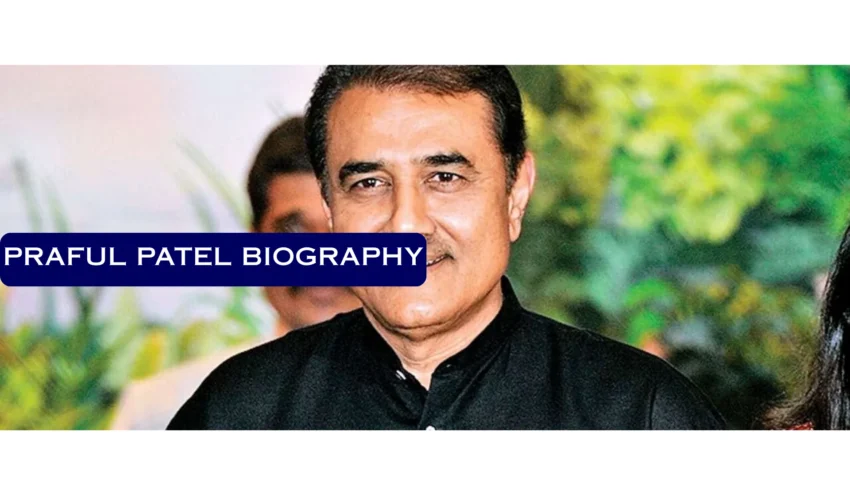
Praful Patel is a senior Indian politician, entrepreneur, and influential leader with decades of service in national politics. Known for his leadership within the Nationalist Congress Party (NCP) and major role in India’s aviation sector, Patel has left a considerable mark on Indian governance and policy.
Profile Data
| Full Name | Praful Manoharbhai Patel |
| Born | 17 February 1957 |
| Age | 66 years |
| Birthplace | Mumbai, Maharashtra, India |
| Nationality | Indian |
| Occupation | Politician, Businessman |
| Parents | Manoharbhai Patel |
| Spouse | Varsha Patel |
| Children | Prajay Patel, Poorna Patel, Niyati Patel, Avni Patel |
| Net Worth | Estimated hundreds of crores INR |
Early Life
Praful Manoharbhai Patel was born on 17 February 1957 into a prominent political and business family in India. His father, Manoharbhai Patel, was a respected Indian National Congress leader who served in the Maharashtra Legislative Assembly and was widely involved in community development. Tragically, Patel’s father passed away when he was only 13 years old, deeply shaping his values and future direction.
The Patel family is of Gujarati origin and is also well‑known for establishing the Ceejay Group, a diversified business that operates across industries like tobacco, packaging, pharmaceuticals, finance, and real estate. This business lineage provided Patel with early exposure to commerce and leadership.
Education
Praful Patel attended Campion School in Mumbai, one of the city’s most reputed institutions, where he completed his early schooling. He continued his academic journey at Sydenham College of Commerce and Economics in Mumbai and graduated with a Bachelor of Commerce (B.Com) degree from the University of Bombay (now University of Mumbai).
This strong foundation in commerce equipped him with crucial skills in business, economics, and organizational management—skills that would later support both his political and entrepreneurial pursuits.
Entry into Politics and Rise in NCP
Praful Patel began his political career influenced by his father’s legacy in public service and community upliftment. He originally aligned with the Indian National Congress but rose to greater prominence after the party’s split in 1999. Alongside Sharad Pawar and Tariq Anwar, Patel became a founding member of the Nationalist Congress Party (NCP) on 25 May 1999, adopting an ideology focused on federalism, social justice, and secular democratic principles.
Within the NCP, Patel grew rapidly as a key strategist and organizer. He has served in critical leadership roles such as General Secretary of the NCP, Deputy Leader in the Lok Sabha, Chairman of the NCP Disciplinary Committee, and in‑charge of major states including Madhya Pradesh and Goa at various points in his career.
In June 2023, he was appointed Working President of the NCP alongside Supriya Sule by party supremo Sharad Pawar, highlighting his central role in the party structure.
Parliamentary Career – Lok Sabha and Rajya Sabha
Praful Patel’s career in the Indian Parliament spans multiple decades and houses:
Lok Sabha (Lower House)
- Elected thrice consecutively to the 10th, 11th, and 12th Lok Sabha starting at age 33.
- Returned to the 15th Lok Sabha in 2009.
These multiple terms underscore his strong political base and consistent support across constituencies.
Rajya Sabha (Upper House)
Patel later progressed to the Rajya Sabha and has been elected multiple times. In April 2025, he commenced another term after being declared elected unopposed, marking his sixth Rajya Sabha membership.
His long legislative career includes participation in key parliamentary committees, such as Finance, Environment and Forests, Civil Aviation, Foreign Affairs, and international parliamentary forums, making him one of India’s most seasoned parliamentarians.
Ministerial Career – Civil Aviation Impact
One of Praful Patel’s most impactful roles was his tenure as Union Minister of Civil Aviation from 2004 to 2011 during the United Progressive Alliance (UPA) government. Under his leadership, Indian civil aviation underwent significant transformation:
Major Developments:
- Expansion and modernization of major airports including Delhi and Mumbai.
- Growth of private airlines and increased competition in the sector.
- Dramatic increase in domestic and international passenger traffic.
- Policies encouraging investment and technological upgrades.
Patel received recognition for his influence in the aviation sector. He was honored as CAPA Aviation Minister of the Year (2005), named No. 1 Minister by India Today in 2006, and awarded Economic Times Reformer of the Year (2007) for his policy contributions.
Leadership in Sports Administration
Beyond politics, Patel has acted prominently in Indian sports governance. He served as President of the All India Football Federation (AIFF) for several years and has been involved in Asian football administration. During his tenure, India hosted major events and engaged with international bodies like FIFA and the AFC, though his extended leadership later drew legal challenges and mixed perceptions among fans and stakeholders.
Social Initiatives and Philanthropy
Patel’s family legacy includes strong philanthropic engagement. The Gondia Education Society is one of India’s largest educational trusts, educating over 110,000 students in disciplines ranging from Arts and Commerce to Engineering and Pharmacy.
The Patel family has also organized mass marriages, medical camps (including thousands of open‑heart surgeries), and social welfare initiatives targeting the disabled, strengthening community bonds and promoting harmony.
Controversies and Criticisms
Like many senior politicians, Patel’s career has been subject to both praise and criticism:
- Aviation Sector Criticisms: Some analysts and public voices have questioned certain Air India policy outcomes and industry liberalization impacts during his tenure.
- AIFF Leadership Debates: Critics in Indian football circles questioned his extended leadership at the AIFF, legal interventions, and implications for domestic football development.
- Political Debates: As a senior NCP leader, Patel has been involved in intra‑party disputes, disciplinary actions against MLAs, and complex alliances within Maharashtra’s shifting political landscape.
Despite controversies, Patel continues to be a major voice in national policy and party leadership.
Personal Life
Praful Patel is married to Varsha Patel since 10 February 1977, and the couple has four children: son Prajay and daughters Poorna, Niyati, and Avni, though he keeps much of his family life private.
He balances political responsibilities with business interests, philanthropic work, and sports‑administration commitments.
Net Worth
Patel’s wealth has been linked to his family’s diversified business holdings within the Ceejay Group and real estate assets. Public disclosures and financial analyses suggest a substantial net worth running into hundreds of crores of Indian Rupees, reflecting property, stocks, and commercial interests within India’s corporate landscape.
FAQs
Q1: Who is Praful Patel?
Praful Patel is a senior Indian politician, leader of the Nationalist Congress Party, former Union Minister of Civil Aviation, parliamentarian, and sports administrator.
Q2: What roles has Praful Patel held?
He has served in Lok Sabha, Rajya Sabha, the Civil Aviation ministry, and leadership positions within the NCP.
Q3: What has Patel done in Indian aviation?
As Civil Aviation Minister (2004–2011), he oversaw airport modernization, airline growth, and policy changes that expanded India’s aviation reach.
Q4: Does Praful Patel have business interests?
Yes, he is linked to the Ceejay Group and diverse investments in industry and real estate.
Q5: Has Patel faced controversy?
Yes—some decisions in aviation and sports administration yielded debate and criticism, though he remains influential.
Conclusion
Praful Patel’s biography spans a complex and extraordinary journey—from a business‑minded youth to a key political strategist, minister, and national leader. His influence on India’s civil aviation landscape, party organization, legislative process, and community welfare initiatives marks him as a multi‑faceted figure in modern Indian public life. Whether praised for reforms or critiqued for leadership decisions, his contributions remain central to discussions about governance, policy, and institutional progress in India.