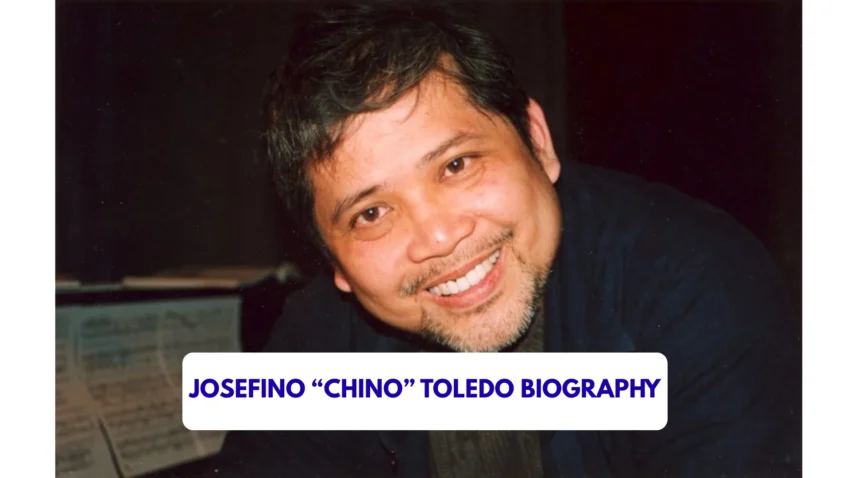
Josefino “Chino” Toledo is a celebrated Filipino composer, conductor, and educator whose career has shaped contemporary Philippine classical and choral music for decades.
Known for blending contemporary Western techniques with Southeast Asian musical sensibilities, Toledo’s work spans orchestral scores, choral pieces, opera, film scoring, and music education. His influence is felt in concert halls, classrooms, and cultural institutions across the Philippines and internationally.
Profile Data
- Full Name: Josefino Javier Toledo
- Stage Name: Josefino “Chino” Toledo
- Born: March 6, 1959
- Age: ~66 (as of 2025)
- Birthplace: Quezon City, Philippines
- Nationality: Filipino
- Occupation: Composer, Conductor, Music Teacher / Professor
- Parents: Victor Toledo and Lolita Javier
- Spouse: (married) — public sources note he is married and has children, but name of spouse is not consistently documented.
- Children: Two children (according to Wikipedia)
- Net Worth: $69,000 (per one biography site)
Early life and musical roots
Josefino Javier Toledo—often called “Chino” Toledo—was born on March 6, 1959, into a musically active family in Quezon City, Philippines. From an early age he was exposed to ensemble playing and Filipino traditional instruments, experiences that later colored his compositional voice. Toledo spent formative years participating in youth ensembles and local orchestras, an upbringing that prepared him for formal training in both the Philippines and abroad.
Education and professional formation
Toledo pursued formal music studies at the University of the Philippines before advancing his training overseas. He earned a Master of Music degree from the Cleveland Institute of Music and undertook further study in Paris—background that helped him marry Western compositional techniques to Southeast Asian musical idioms. These academic foundations supported a career in composition, conducting, and teaching at top Philippine institutions.
Career highlights and roles
Over the years, Josefino “Chino” Toledo has worn many hats: composer, conductor, professor, and music director. He has served as a full professor and chair in composition and theory at the University of the Philippines College of Music and has led ensembles including the University of the Philippines Symphony Orchestra and the Metro-Manila Concert Orchestra. He was also founding music director of ensembles such as Grupo 20/21, and has directed music programs at institutions like Miriam College’s Center for Applied Music.
Toledo’s involvement in both academic and community ensembles helped bridge the gap between contemporary classical music and broader Filipino audiences. He has been involved with international festivals and music projects that furthered exchanges between Asian and Western music communities.
Compositional style and notable works
Toledo’s music is frequently described as energetic, rhythmic, and attentive to the textures and timbres of Southeast Asian traditional music while utilizing contemporary compositional methods. He has written for orchestra, chamber ensembles, choir, theater, film, and opera. Notable works include choral pieces that have been performed in international competitions and festivals and several award-winning theater and film scores. His work often explores identity, nature, ritual, and community—themes that resonate with both local and international performers and audiences.
Awards and recognitions
Toledo’s contributions have been officially recognized by multiple organizations. He has received national awards, fellowships, and honors including distinctions from the University of the Philippines, national arts bodies, and international residencies and fellowships. These accolades reflect his dual influence as a creator and educator in Philippine music.
Teaching, mentorship, and influence
As an educator, Toledo mentored generations of Filipino composers and performers. His role at the University of the Philippines and other educational centers provided students with rigorous composition and conducting training, and his leadership in ensembles created practical platforms for new Filipino works to be premiered and heard. Many younger composers and conductors cite his mentorship as pivotal in their development.
Work in film, theater, and outreach
In addition to concert music, Toledo has scored films and directed music for theater productions, demonstrating versatility across media. His music direction and scoring for stage and film brought new musical perspectives to popular Filipino productions, while his outreach and festival work helped expand the audience for contemporary Philippine music.
Legacy and cultural importance
Josefino “Chino” Toledo stands as a bridge between tradition and modernity: a composer who honors regional musical color and an educator who founded ensembles and programs that sustain the next generation of Filipino musicians. His legacy is visible in concert programs, academic syllabi, and ongoing performances of his works both locally and abroad.
Personal life (brief)
Toledo has maintained a professional life deeply connected to the Philippine music scene. While public attention centers on his professional achievements, he has also engaged with cultural institutions and community projects, contributing time and expertise to arts promotion and education.
Frequently Asked Questions (FAQs)
Who is Josefino “Chino” Toledo?
Josefino “Chino” Toledo is a Filipino composer, conductor, and music professor known for combining contemporary Western composition techniques with Southeast Asian musical elements. He has led major Filipino ensembles and taught at the University of the Philippines.
When and where was he born?
Toledo was born on March 6, 1959, in Quezon City, Philippines.
What are some notable positions he’s held?
He has been chair of the UP department of composition and theory, music director/conductor for the UP Symphony Orchestra, founding director of Grupo 20/21, and executive director at the Miriam College Center for Applied Music.
Has he received major awards?
Yes — his honors include university awards, national recognitions in the Philippines, and international fellowships.
Where can I hear his music?
Recordings and performances of his work may be found through university concert programs, cultural festivals, selected streaming platforms, and recordings released by Filipino ensembles.
Conclusion
Josefino “Chino” Toledo has built a lifelong practice at the intersection of composition, conducting, and teaching. His music—rooted in Filipino musical traditions yet conversant with global contemporary techniques—has helped define a modern, regional voice in classical music. As a mentor and music director, his influence extends beyond his own compositions to the careers of countless musicians and the shape of Philippine music education. For anyone curious about contemporary Filipino music, Toledo’s life and works are essential study.