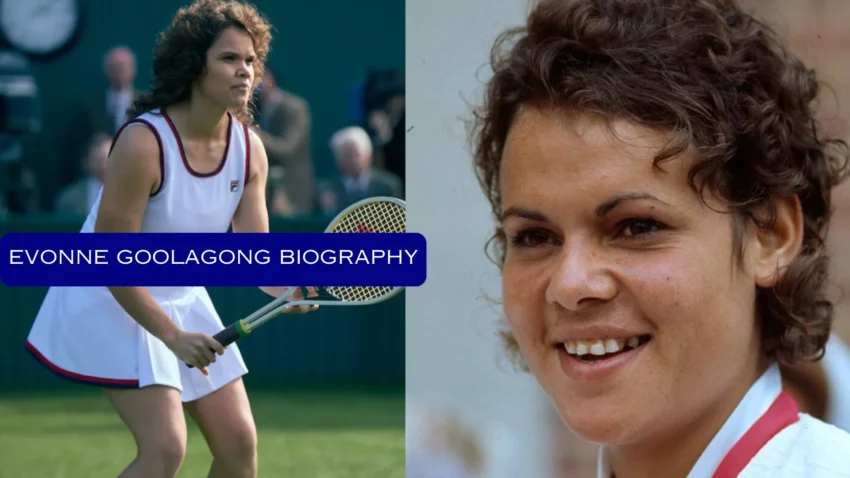
Evonne Goolagong, later known as Evonne Goolagong Cawley, is one of the most revered figures in tennis history and a trailblazer for Indigenous athletes worldwide.
Her remarkable journey from a rural Australian upbringing to international tennis stardom exemplifies perseverance, talent, and humility. As a seven-time Grand Slam singles champion and one of the first Aboriginal athletes to reach global fame, Goolagong’s story continues to inspire generations.
Profile
| Profile | Details |
|---|---|
| Full Name | Evonne Fay Goolagong Cawley |
| Born | July 31, 1951 |
| Age | 74 years old |
| Birthplace | Griffith, New South Wales, Australia |
| Nationality | Australian |
| Occupation | Former Professional Tennis Player |
| Parents | Ken Goolagong (Father), Melinda Goolagong (Mother) |
| Siblings | Seven siblings |
| Spouse | Roger Cawley |
| Children | Kelly Inala Cawley, Morgan Kyeema Cawley |
| Relationship | Married |
Early Life
Evonne Fay Goolagong was born on 31 July 1951 in Griffith, New South Wales, Australia. She grew up in the nearby town of Barellan as the third of eight children in a Wiradjuri Aboriginal family. Her early life was marked by modest means and the cultural challenges faced by Indigenous Australians at the time.
Goolagong was first drawn to tennis as a child, playing with a racquet she borrowed and practicing against a wall at the local courts. Her talent was soon noticed by local coach Vic Edwards, who encouraged her family to allow her to move to Sydney for proper training. This move was the catalyst for her rise in competitive tennis.
Breakthrough in Junior Tennis
In Sydney, Goolagong honed her skills and quickly excelled in junior competitions. By 1970, she had become a standout performer in national junior events, demonstrating a combination of grace, agility, and strategic prowess that would define her game.
Grand Slam Career: Triumphs and Records
Evonne Goolagong’s Grand Slam journey began in earnest in the early 1970s. She quickly established herself among the world’s best, earning a reputation for her fluid movement, tactical intelligence, and poised temperament.
Singles Achievements
Goolagong captured seven Grand Slam singles titles during her career:
- French Open: 1971
- Wimbledon: 1971, 1980
- Australian Open: 1974, 1975, 1976, 1977 (December)
Her victory at the 1971 Roland Garros as a 19-year-old marked a historic moment—it was her first major singles title and a breakthrough for Indigenous representation in tennis.
One of her most extraordinary accomplishments came in 1980 when, as a mother, she won Wimbledon, becoming the first woman to do so since 1914—a testament to her enduring skill and determination.
She also reached the US Open final four years in a row (1973–1976) but finished runner-up each time, a notable yet bittersweet record.
Doubles and Mixed Success
Goolagong was not only a formidable singles player but also excelled in doubles and mixed doubles. She won multiple major doubles titles, including Australian Open and Wimbledon doubles crowns, as well as a mixed doubles Grand Slam at the French Open.
Playing Style and Strengths
Evonne Goolagong’s playing style was characterized by:
- Elegant footwork and effortless movement
- Exceptional court coverage
- Precision and tactical finesse rather than sheer power
- A composed and calm demeanor under pressure
Her one-handed backhand, quick reflexes, and ability to read the game made her a formidable opponent across all surfaces.
Personal Life
In 1975, Evonne married English tennis player Roger Cawley. Together they raised two children, Kelly Inala and Morgan Kyeema. Balancing motherhood with professional tennis was groundbreaking; her 1980 Wimbledon triumph post-childbirth became a symbol of athletic resilience and feminine strength.
Life After Tennis: Legacy and Impact
Goolagong retired from professional tennis in 1983, largely due to injuries, but her influence on the sport continued. She served as Australia’s Fed Cup captain and later dedicated herself to youth development and community engagement.
She founded the Evonne Goolagong Foundation, which delivers tennis programs, scholarships, and development opportunities—especially for Indigenous young people—to promote better health, education, and employment outcomes.
Awards
Evonne Goolagong’s legacy is reflected in numerous prestigious honors:
- Australian of the Year (1971)
- Member of the Order of the British Empire (1972)
- Officer of the Order of Australia (1982)
- Induction into the International Tennis Hall of Fame (1988)
- Companion of the Order of Australia (2018)
- Philippe Chatrier Award (2018) for outstanding contribution to tennis
The Evonne Goolagong Cawley Trophy at the Brisbane International is named in her honor, and her memorabilia, including Wimbledon trophies and racquets, are housed at the National Museum of Australia.
FAQs
Q: How many Grand Slam singles titles did Evonne Goolagong win?
A: She won seven Grand Slam singles titles.
Q: Was Evonne Goolagong the first Indigenous world No. 1 tennis player?
A: Yes — she became the first Aboriginal Australian to be ranked world No. 1.
Q: What is Evonne Goolagong doing now?
A: She leads community programs through the Evonne Goolagong Foundation, promoting sport and opportunities for youth.
Q: What historical Wimbledon record does she hold?
A: She was the first woman in the modern era to win Wimbledon as a mother (1980).
Conclusion
Evonne Goolagong’s biography stands as one of the most remarkable stories in sports history. Her remarkable tennis career, cultural influence, and dedication to community service elevate her status beyond athletic greatness to that of a global icon. Her legacy continues to inspire athletes and change lives around the world.