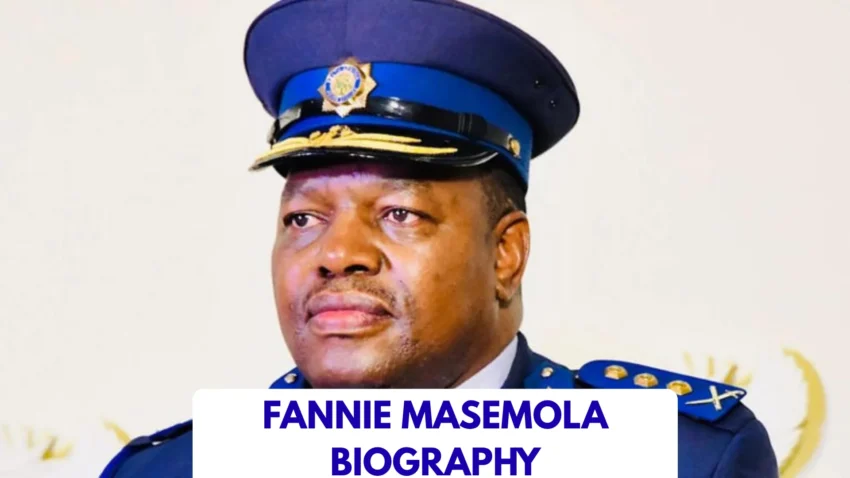
Sehlahle Fannie Masemola is a career South African police officer who became National Commissioner of the South African Police Service (SAPS) in March 2022 after a long operational career across provinces.
His appointment followed decades in policing, including senior leadership roles and responsibility for major security operations. In recent years his tenure has included both administrative reforms and public controversies.
Early life and background
Sehlahle Fannie Masemola was born in 1964 in Groblersdal, Limpopo province, South Africa. He grew up in a family with a policing background and developed an early interest in law enforcement and public safety. Details of his childhood are limited in public sources, but his upbringing in Limpopo is consistently noted in official and media biographies.
Education and professional training
Masemola built his career on a mix of formal policing qualifications and in-service professional development. Public records and official bios report that he holds a Diploma and a Higher Diploma in Policing and has also completed postgraduate study in public management. Over the years he attended numerous leadership and operational training courses customary for senior SAPS officers.
Policing career — steady rise through the ranks
Masemola joined the South African Police Service in 1987 and spent the early decades of his career in operational roles across several provinces. He is widely reported to have served a significant portion of his career in KwaZulu-Natal, where he progressed to the rank of Major General and served as Deputy Provincial Commissioner in charge of operations. By 2010 he had been transferred to Pretoria to head divisions including Protection and Security Services, and later served as Deputy National Commissioner responsible for policing.
His operational experience includes coordination of security for elections, handling large-scale policing operations, and work on reducing high-impact crime types such as cash-in-transit heists. Colleagues and official statements emphasize Masemola’s long record in the operational environment — a factor singled out when he was considered for national leadership.
Appointment as National Commissioner
On 31 March 2022 President Cyril Ramaphosa announced the appointment of Lieutenant General Sehlahle Fannie Masemola as National Commissioner of the South African Police Service. The appointment followed the departure of the former commissioner and was presented as a move to ensure continuity and operational leadership at the top of SAPS. Political parties and civil-society groups reacted with a range of statements — from cautious welcome to calls for oversight — reflecting the high public interest in policing leadership.
Priorities and leadership style
As National Commissioner, Masemola publicly framed his priorities around restoring public confidence in policing, strengthening crime-combatting capacity, supporting investigators, and improving internal systems in SAPS. He has also spoken about the need to protect front-line officers’ welfare and to increase collaboration with communities and other agencies to tackle complex crimes. Official SAPS media statements and Masemola’s public addresses reiterate these operational and personnel-focused priorities.
Achievements and notable actions
- Operational experience: Credited with a long track record coordinating major security operations and supporting election security planning.
- Leadership continuity: Seen by government statements as offering institutional continuity after leadership changes at SAPS.
- Public engagement: Frequently appears in media briefings to discuss operational priorities and crime initiatives, aiming to reassure communities and stakeholders.
Controversies and scrutiny
Masemola’s time as National Commissioner has not been without controversy. Media reporting and public inquiries in later years raised questions about procurement decisions and alleged misuse of funds connected to some property acquisitions linked to officers or units. Investigative coverage and legal reviews have, at times, led to high-profile allegations — some of which have been denied or described as unproven pending investigations or court outcomes. As with any developing legal or investigative matter, public reporting may reflect allegations that are still subject to formal processes and should not be read as conclusive findings without court decisions.
Challenges facing Masemola and SAPS
South Africa’s policing environment presents structural challenges: high levels of violent and property crime, public concerns about corruption and accountability, resource constraints in certain precincts, and the need for improved investigative capacity. As National Commissioner, Masemola’s leadership is measured by the degree to which SAPS can stabilize internal integrity, improve response times, reduce specific crime trends, and rebuild trust with communities and oversight institutions.
What supporters and critics say
Supporters argue that Masemola’s long operational history and experience across provinces qualify him to manage the complexities of national policing — particularly during times of leadership transition. Critics contend that structural reforms and transparency measures must be accelerated, and that any credible allegations of misconduct must be investigated and adjudicated swiftly to protect institutional legitimacy. These differing views are reflected in statements from political parties, watchdogs, and media investigations.
FAQs — Frequently Asked Questions
Q: When was Fannie Masemola appointed National Commissioner?
A: He was appointed National Commissioner of the South African Police Service on 31 March 2022.
Q: Where was Fannie Masemola born?
A: Public biographies list his birthplace as Groblersdal in Limpopo province, born in 1964.
Q: When did Masemola join the police?
A: Masemola joined SAPS in 1987 and served in various operational roles before rising to senior leadership.
Q: What are his main priorities as National Commissioner?
A: He has emphasised crime-combatting, officer welfare, community engagement, and restoring public confidence in policing.
Q: Has he faced any corruption allegations?
A: Media reports in later years have cited allegations connected to procurement and property acquisitions; these have drawn public scrutiny and investigative attention. Allegations should be understood as subject to legal process.
Q: Where can I read official statements from SAPS about Masemola?
A: Official SAPS media pages and government press releases publish statements and speeches linked to his leadership.
Conclusion
Sehlahle Fannie Masemola’s career traces a conventional — but notable — path through South African policing: years of operational work, ascent to senior provincial roles, and eventual national leadership. His tenure as National Commissioner has combined efforts to stabilise policing operations with the inevitable scrutiny that accompanies leadership at the top of a major public institution. For readers seeking to understand the man and the office, it’s important to combine official biographies, SAPS statements, and reputable independent reporting to get a balanced, evidence-based picture as events continue to unfold.