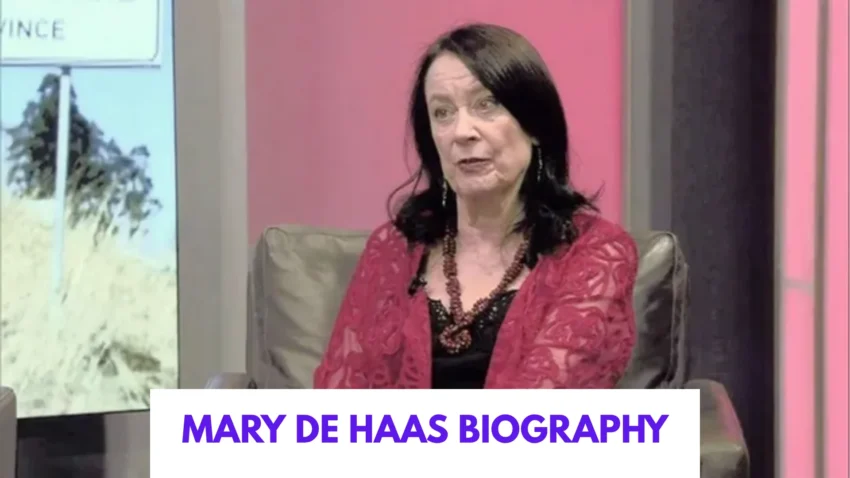
Who is Mary de Haas?
Mary de Haas is a veteran South African social scientist and long-time activist whose career spans academic research, teaching and sustained civil society work around political violence, policing, and medical rights.
De Haas rose to prominence through her careful documentation of political violence in KwaZulu-Natal and ongoing advocacy for victims, transparency and accountable policing.
Profile Data
- Full Name: Mary de Haas
- Nationality: South African.
- Occupation: Social scientist, academic, human-rights activist, violence monitor, and founding member of the Medical Rights Advocacy Network (MeRAN).
- Education: Master of Social Science (MSocSci) in Anthropology (cum laude) — University of Natal (now UKZN).
- Academic posts: Former Senior Lecturer and Programme Director in Social Anthropology (retired 2002). Honorary Research Fellow in the School of Law, University of KwaZulu-Natal.
- Honors: Doctor of Laws (LLD) honoris causa — Rhodes University (award reported 2021).
Education and academic career
De Haas earned a Master of Social Science (MSocSci) in Anthropology, awarded cum laude for research on African marriage and divorce. She served as a senior lecturer and programme director in Social Anthropology at the University of Natal (now University of KwaZulu-Natal) until her retirement in 2002. After retirement she continued as an Honorary Research Fellow and remained active in research and public policy debates.
Activism and the Medical Rights Advocacy Network (MeRAN)
Beyond academia, Mary de Haas has been heavily involved in advocacy work, including founding membership of the Medical Rights Advocacy Network (MeRAN). MeRAN is an independent group focused on medical ethics, patients’ rights and advocacy on health-system failures; de Haas has contributed to reports and public campaigns on health policy and medical standards. Her work in this sphere complements her violence-monitoring and human-rights activism.
Violence monitoring and public influence
De Haas became particularly known for compiling and publicising data on political killings and violent incidents in KwaZulu-Natal — often distributing reports and analysis to media, civil society and policymakers. Her research and public interventions have won both praise for exposing abuses and criticism from those she challenges; nonetheless she has remained a persistent and evidence-driven voice in debates about policing and justice.
Awards, recognition and public roles
In recognition of decades of public interest work and research, Rhodes University awarded Mary de Haas an honorary Doctor of Laws (LLD) — a symbolic acknowledgment of her contribution to social justice and the documentation of political violence. She is regularly called upon by media and parliamentary bodies to present evidence or testify on matters related to violence, policing and medical ethics.
Recent developments (parliamentary testimony and media attention)
In November 2025 Mary de Haas testified before a South African parliamentary Ad Hoc Committee that has been probing allegations about political interference and corruption in the criminal justice system. Her testimony and public statements about investigative processes, secrecy and the protection of sources have been covered widely in national outlets and sparked debate about how violence-monitoring evidence should be handled.
Why Mary de Haas matters
Mary de Haas is a key figure for anyone researching political violence and policing in South Africa because she combines academic rigour with sustained public advocacy. Her work demonstrates how long-term documentation by social scientists can inform policy, hold institutions to account and keep public attention on patterns of violence that might otherwise be obscured. For searchers using terms like “Mary de Haas biography,” “Mary de Haas activism,” or “Mary de Haas MeRAN,” the record shows a scholar-activist who moves between research, media and civic channels to press for reform.
FAQs
Who is Mary de Haas?
Mary de Haas is a South African social scientist, human-rights activist and violence monitor, known for her research on political violence and involvement in health-rights advocacy via MeRAN.
What is MeRAN and what is her role?
MeRAN (Medical Rights Advocacy Network) is an advocacy group focused on medical ethics and patients’ rights. Mary de Haas is a founding member and has worked on reports and public campaigns addressing health-system issues.
What are her academic qualifications?
She holds an MSocSci (cum laude) in Anthropology from the University of Natal and was a senior lecturer in Social Anthropology; she is an Honorary Research Fellow at UKZN.
Has she received any formal honors?
Yes — she received a Doctor of Laws (LLD) honoris causa from Rhodes University.
Is Mary de Haas currently involved in parliamentary inquiries?
Yes — she has recently appeared to give evidence at parliamentary inquiries into allegations concerning policing and corruption (November 2025 hearings).
What personal details are known (age, birthplace, family)?
Most personal details like exact birthdate, birthplace, family status and net worth are not publicly documented in trustworthy sources and are therefore omitted to respect privacy and accuracy.
Conclusion
Mary de Haas stands out as a scholar who didn’t retreat from public life after retirement — instead she leveraged her academic training to document violence, advocate for patients’ rights and influence national debates about policing and justice. Her career is a model of how rigorous social research and principled activism can intersect to press for accountability. For readers searching “Mary de Haas biography,” the reliable through-lines are clear: academic credentials in anthropology, long-term violence monitoring in KwaZulu-Natal, founding membership of MeRAN, and public recognition including an honorary LLD. For the most recent news about her testimony and public interventions, consult major South African outlets and parliamentary records.