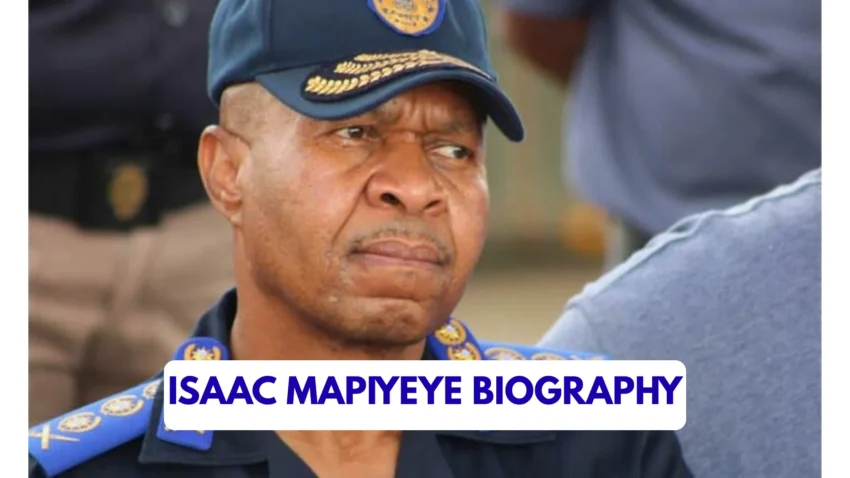
Isaac Mapiyeye has been a central figure in South Africa’s metro policing — rising through the ranks of the Ekurhuleni Metropolitan Police Department (EMPD) to become its Chief of Police.
However, his tenure has not been without turbulence. From a rising career and leadership roles to serious allegations of misconduct and a suspension, Mapiyeye’s story reflects the complexities of policing, accountability, and public trust. In this post, we unpack his background, career trajectory, controversies, and where things stand today.
Early Career and Entry into Policing
Public records on Mapiyeye’s early personal life — including his birthdate or place of origin — remain scarce. What is clear, however, is that his career in policing began at a relatively junior level. He served as a traffic officer with EMPD in the Benoni area, and later as a provincial traffic inspector under the Transvaal Provincial Administration. These early roles — while modest — laid the foundation for his understanding of traffic enforcement, municipal regulations, and the inner workings of local policing. Over time, he transitioned from traffic enforcement to logistics and technical oversight: before his appointment as Chief, Mapiyeye reportedly spent eight years as the director of EMPD’s technical and logistics department.
Rise to Chief of Police (2017 Appointment)
The turning point in Mapiyeye’s career came in 2017, when he was appointed head of EMPD. At that time, reports noted he had over 25 years of working experience in various capacities within the metro police — including traffic supervision, logistics, and municipal policing infrastructure. As Chief of Police, he assumed responsibility for coordinating metro-wide policing strategies, overseeing traffic enforcement, municipal regulation, crime prevention operations, and managing the EMPD’s technical and support departments. For many, his ascension seemed to signal continuity and experience — an insider who had climbed the ranks, familiar with both ground-level policing and administrative management.
Tenure Highlights and Leadership Challenges
During his time in leadership, Mapiyeye was seen as a senior figure with substantial experience. The 2017 appointment followed extensive service, including both fieldwork and logistical oversight. However, the details about reforms, policing outcomes, or his strategic vision while Chief have been sparsely documented in public sources. There is limited reporting of his accomplishments beyond his administrative and supervisory roles. What stands out more prominently in recent years are controversies and accusations — which began to overshadow his earlier career.
Controversies — Sexual Misconduct Allegations (2024)
In July 2024, a serious allegation emerged: a female EMPD employee formally accused Mapiyeye of sexual harassment and inappropriate behavior. The complainant submitted the case to the head of HR on July 12, 2024. The woman alleged a history of unwanted sexual advances dating back to as early as 2011, describing the behavior as “intimidatory and deliberate.” According to her statement, after she blocked Mapiyeye’s phone number, he attempted to contact her sister multiple times — which she viewed as harassment continuing outside of professional interactions.
Additionally, the victim described how the alleged harassment impacted her mental health: by July 2024, she reportedly experienced anxiety, poor concentration, and other symptoms, prompting her to seek psychiatric treatment and eventual hospitalisation later that month.
Following the filing of the complaint, the city council authorized the appointment of an independent investigator. On September 26, 2024, the council placed Mapiyeye on precautionary suspension. His deputy at the time, Julius Mkhwanazi, was appointed acting chief. At the time of suspension, the city spokesperson indicated the council awaited the investigator’s report, to be submitted within 30 days. Mapiyeye responded publicly: “I have no comment, let the due process take its course,” adding that departmental policy prevented him from interacting with the media.
Further Allegations & 2025 Inquiry — Political Meddling and Commission Testimony
The controversies surrounding Mapiyeye didn’t end with the 2024 misconduct allegations. In 2025, additional claims emerged — this time involving alleged interference from city council members in policing matters. On November 6, 2025, Mapiyeye testified before the Madlanga Commission of Inquiry, accusing members of the city’s municipal council of “politically meddling” in policing decisions.
Specifically, Mapiyeye said that council members had overridden his authority by supporting actions of subordinates under investigation — including the former director of special services, Julius Mkhwanazi. According to the allegations, Mkhwanazi had signed questionable memorandums of understanding (MOUs) with a private security–linked businessman, Vusimuzi “Cat” Matlala, granting certain privileges in exchange for resources — a deal Mapiyeye claimed to have opposed.
Mapiyeye further alleged that the contract allowed the businessman to operate “with impunity,” giving rise to broader concerns about corruption and abuse of municipal policing powers. He also lamented that multiple serious misconduct cases within EMPD had stalled for over a year, frustrating officers who believed in oversight and accountability.
Public Perception, Political Protection & Ongoing Investigation
Following testimony and renewed media scrutiny, some reports described Mapiyeye as “highly politically protected,” claiming that his influence and files of sensitive information shielded him from swift disciplinary action. Additionally, there have been claims — though unverified publicly — that Mapiyeye was involved in other serious allegations, including the alleged assault of a heavily pregnant woman working as a government security guard.
As of late 2025, it remains unclear what the final outcomes of the investigations are. The delay in formal accountability — whether from the independent investigation, council review, or judiciary process — has left EMPD’s leadership in limbo, and public confidence has been shaken.
What We Know — and What Remains Unclear
| What is Known | What is Unclear / Unknown |
|---|---|
|
|
Why Isaac Mapiyeye’s Story Matters
The saga of Isaac Mapiyeye is more than the biography of one individual — it underscores systemic tensions in municipal policing, accountability, corruption, and political interference. Some of the broader takeaways:
- Accountability in Policing: Seniority and rank do not shield law enforcement officers from scrutiny — especially when there are serious allegations of misconduct.
- Institutional Oversight: Independent investigative bodies and municipal councils play critical roles in ensuring transparency — though their effectiveness depends on prompt action and public trust.
- Political Entanglement: When political actors influence policing decisions, the line between law enforcement and political patronage blurs — undermining public confidence.
- Public Trust & Morale: Allegations and stalled investigations can demoralize honest officers, embolden corrupt actors, and erode citizens’ faith in law enforcement institutions.
FAQs — Frequently Asked Questions
Who is Isaac Mapiyeye?
He is the former Chief of Police of EMPD, promoted to that position in 2017 after decades of service.
Why was he suspended?
He was placed on precautionary suspension in September 2024 after a subordinate filed a formal complaint alleging sexual harassment and other misconduct.
What other allegations does he face?
In 2025, Mapiyeye testified before the Madlanga Commission claiming political interference by city council members in departmental policing decisions — including fraudulent contracts and revoked oversight of officers under investigation.
Has he been convicted or formally charged?
As of late 2025, public records do not show a conviction. Investigations appear ongoing, and there has been no clear public statement about final disciplinary or legal outcomes.
What is the status of EMPD’s leadership now?
After his suspension, Mapiyeye’s deputy, Julius Mkhwanazi, was appointed acting Chief. The department remains under scrutiny until investigations conclude.
Conclusion
Isaac Mapiyeye’s journey — from traffic officer to Chief of Police of EMPD — once stood as a testament to steady rise through the ranks and institutional trust. Yet, in a short span, serious allegations and public scrutiny have turned that narrative on its head. His story serves as a stark reminder: for those in power — especially in policing — rank offers no permanent shelter from accountability. As investigations continue and public attention remains high, the case of Mapiyeye will likely remain emblematic of the broader struggle for transparency, justice, and the integrity of law enforcement.