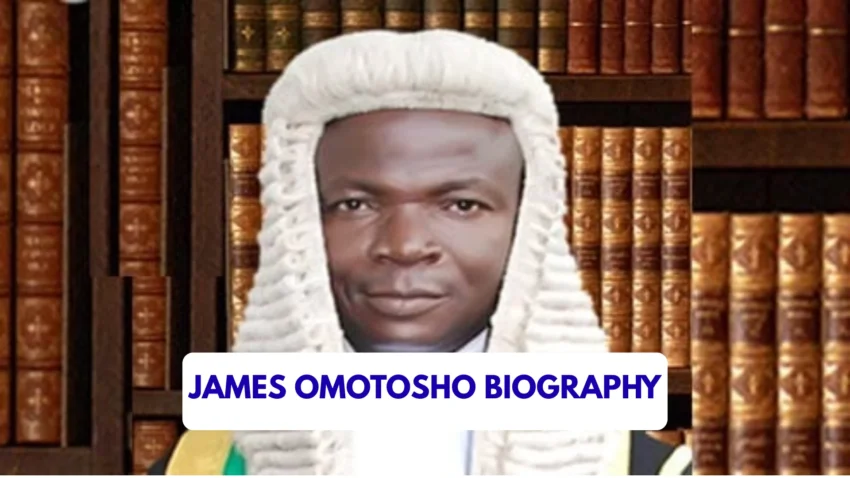
Justice James Kolawole Omotosho is a senior Nigerian jurist who has drawn national attention for presiding over several high-profile and politically sensitive cases in the Federal High Court in Abuja.
Over the past few years he has become one of the most watched figures in Nigeria’s judiciary — both praised for decisive rulings and criticized for decisions that sparked public debate.
Profile Data
- Full Name: James Kolawole Omotosho
- Born: 21 July 1969? (Sources conflict: most say 1966.)
- Age: ~59 (as of 2025)
- Birthplace: Ajegunle, Lagos State, Nigeria
- State of Origin (Nigeria): Ogun State (Ijemo-Abeokuta)
- Nationality: Nigerian
- Occupation: Judge (Federal High Court, Abuja)
- Religion: Christianity
- Spouse: Mrs. J.K. Omotosho
- Children: He has children (sons and daughters), but their names are not publicly disclosed.
- Net Worth: Estimates vary — sources say around US$7 million.
Early life and background
James Kolawole Omotosho was born on 21 July 1966 in Ajegunle, Lagos State, and he hails from Ijemo-Abeokuta in Ogun State. He grew up in Lagos and pursued his early education there before transitioning into legal studies.
Education and early career
Omotosho’s educational path included a National Certificate in Education (NCE) and later law studies. He obtained his LLB from Olabisi Onabanjo University (OOU) and completed the Nigerian Law School before being called to the Bar. After years of practice, he was elevated to the bench as a Federal High Court judge.
Judicial appointment and rise
Justice Omotosho’s appointment to the Federal High Court placed him in a role that handles federal jurisdiction matters — commercial disputes, national security cases, and other federal issues. His assignments and rulings in those areas increased his national profile.
Notable trials and rulings
1. High-profile national security cases
In 2025 Justice Omotosho presided over some of the country’s most closely watched national-security and political trials, which received wide media coverage and sparked national commentary.
2. Political and governance disputes
He has issued rulings in high-stakes governance disputes, including questions about emergency proclamations and party leadership battles—decisions that elicited both praise and criticism.
Style of judging — approach and critics
Observers characterize Justice Omotosho as a judge who issues decisive, sometimes sweeping rulings. Supporters say this is necessary for timely resolution; critics argue some rulings reflect an expansive view of jurisdiction or invite political controversy.
Controversies and public reaction
Because of his docket, some of Justice Omotosho’s decisions have provoked strong reactions: social-media backlash, editorial critiques, and legal commentary about judicial impartiality and scope.
Personal life
Public profiles list him as married with children, of Yoruba origin and Christian faith. He keeps personal details relatively private, as is typical for serving judges.
Why James Omotosho matters
- He hears cases that touch national security and governance.
- His rulings affect public policy and political dynamics.
- His courtroom decisions spark debate about the nature of judicial power in Nigeria.
FAQs (Frequently Asked Questions)
Who is James Omotosho?
He is Justice James Kolawole Omotosho, a Federal High Court judge in Abuja known for presiding over high-profile federal matters.
When and where was he born?
Born 21 July 1966 in Ajegunle, Lagos State; origin: Ijemo-Abeokuta, Ogun State.
What are some notable cases he presided over?
Major national security and politically sensitive governance cases in 2025 that were widely covered in national press.
Is he controversial?
Yes — several rulings have provoked public debate and editorial critiques, though opinions are divided.
Where can I read his judgments?
Official court repositories and national legal reporting sites publish judgments or summaries; consult legal databases for full texts.
Conclusion
Justice James Omotosho’s work sits at the intersection of law, politics, and national security. Whether viewed as a firm hand at the bench or a controversial figure, his rulings have shaped recent legal discourse in Nigeria. For those tracking Nigerian jurisprudence, his judgments and their broader implications are essential reading.